Posts

Showing posts with the label labour

april 28: day of mourning for workers killed and injured on the job

Image
April 28 is the Day of Mourning for Workers Killed or Injured on the Job.  The canary is a potent symbol and a powerful reminder.  This tiny, fragile bird was the only thing that stood between miners and a suffocating death. The world over, workers are little more than canaries in their own workplaces. No worker should ever be killed or injured because of work, yet it happens on a regular basis. The pandemic has put the spotlight on the many dangers that workers face every day -- but it hasn't led to employers or governments bringing an end to dangerous practices. In Canada and the US, a huge percentage of workers don't even have access to paid sick leave. And the pandemic has only extended the long reach of precarious work. When workers do not have guaranteed work, or don't get enough hours, or earn too little to survive, they are much less likely to speak up about unsafe working conditions. Employers know this. In the precarious workplace, all too often there is scant att...

what i'm reading: ghosts of gold mountain, the epic story of the chinese who built the transcontinental railroad

Image
Ever since reading, in 2006, The National Dream and The Golden Spike , Pierre Berton's books about the building of the Canadian railroad, I've been interested in the Chinese railroad workers. Two details stuck in my memory: Chinese workers retaining their food traditions (and the racism and abuse they encountered over this) and that they went on strike . I was excited to know that these underpaid, undervalued, and abused workers organized themselves to fight back. So when I saw a very positive review of The Ghosts of Gold Mountain: The Epic Story of the Chinese Who Built the Transcontinental Railroad , I immediately requested it from my library. Gordon Chang, one of the preeminent historians of the Chinese experience in North America, writes from an American context, but the story applies to Canada and other countries, as Chinese labour built railroads all over the world. Outsized labour under outsized conditions To say that the Railroad Chinese (as they are called) toiled und...

what i'm reading: beaten down, worked up: the past, present, and future of american labor

Image
Beaten Down, Worked Up: The Past, Present, and Future of American Labor by Steven Greenhouse is exactly what the subtitle says: a history and analysis of the rise, decline, and re-emergence of the labour movement in the United States. Although the context is American, the lessons in the stories easily apply to Canada, and perhaps globally, to labour movements everywhere.  Greenhouse covered labour issues for The New York Times for more than 30 years. It's obvious that the research for Beaten Down, Worked Up was vast and meticulous, but the book is never bogged down by too much detail. The writing is clear and accessible. Greenhouse is unapologetically pro-labour, but not a cheerleader for unions.  I found the book easy to read and compelling, and I recommend it highly both to readers of nonfiction with an interest in history and to labour activists. It should be required reading for all workers who are union skeptics! I really appreciated how this book was organized. Gre...

ruth bader ginsburg, rest in power

Image
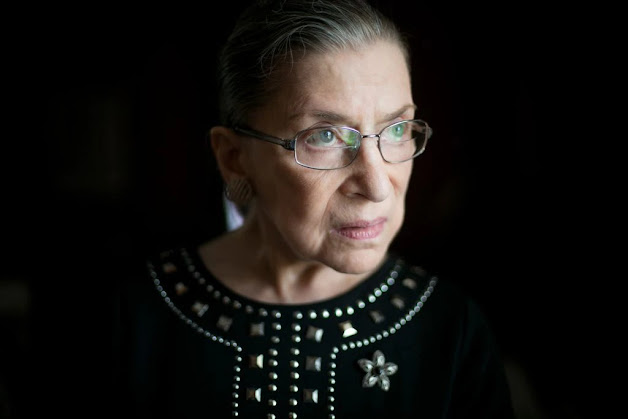
  These highlights of Ginsburg's decisions and dissents on the SCOTUS are a joy to read. I used two sources, and decided to keep the overlap. Many highlight the reason she was affectionately known as the Notorious RBG. United States v. Virginia , 1996 In United States v. Virginia,   Ginsburg  wrote the majority opinion that would serve as a milestone moment for women’s rights and university admission policies. The case challenged a policy by the Virginia Military Institute that barred women from being admitted to the institution. Although the state of Virginia said it would create a separate educational program for women for the military institute, Ginsburg questioned its merits, writing that “Women seeking and fit for a VMI-quality education cannot be offered anything less, under the Commonwealth’s obligation to afford them genuinely equal protection.” “Neither federal nor state government acts compatibly with equal protection when a law or official policy denies t...

for labour day: the unsung heroes of our movement

Image
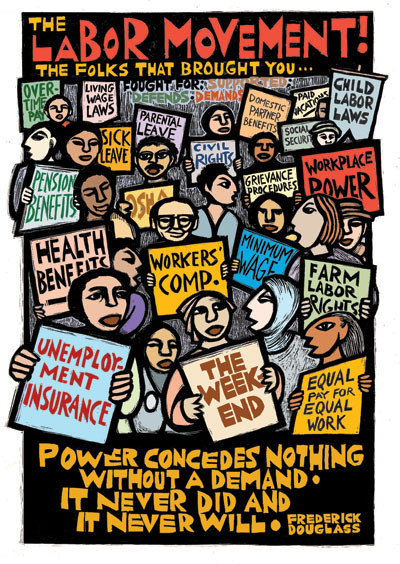
I thought about choosing a few memorable heroes of the labour movement throughout history, writing some short profiles. There's no shortage of fascinating information about the likes of Eugene V. Debs, A. Philip Randolph, Dolores Huerta, Mary Harris Jones, Joe Hill... and so on. My own experience has shown me that the heroes of any movement are people whose names are known only to those around them. The people who are the labour movement on its most granular level. The real labour behind the movement. The shop steward who listens patiently, and says, If you decide to go forward with this, your union will support you. I am here for you. The colleague who raises their hand at a staff meeting, and says, I'm concerned that we are all very stressed by the volume of work we're dealing with. The worker who knocks on their supervisor's door to discuss an ongoing harassment issue she has witnessed. The mom who brings her kids to a local picket line, saying, "These people a...

which side are you on: the unprecedented strike by nba players is a watershed moment for justice

Image
First of all, it's not a boycott. It's a strike. And a  wildcat strike to boot. When the players on the Milwaukee Bucks chose not to play in the NBA playoffs -- joined by their baseball counterparts, the Brewers, with other teams quickly following -- they became part of a tradition that reaches back to Tommie Smith and John Carlos, to Muhammad Ali, to Carlos Delgado, all the way to the present, to Maya Moore and Colin Kaepernick.  The striking NBA players are part of Black Lives Matter. They are part of the present-day civil rights movement. But they are part of something else, too. They are part of the labour movement. Professional athletes are workers.  They may be wealthy -- though all are not as wealthy as the top earners -- but their working life is perilously short, and throughout history, has been awash in exploitation. If some earn huge salaries today, that's because so many people are profiting from their labour.  Strike vs boycott So why is this action a...

this year, day of mourning carries great urgency and great sadness

Image
Each year on April 28, we recognize and remember workers who have died, been injured, and become ill through their work. In 2020, the year of the coronavirus pandemic, this day carries profound and urgent meaning. Health care workers, emergency workers, supermarket workers, and others put their health at risk and their lives on the line daily. Most poignantly, health care workers risk illness and must isolate from their own families in order to save the lives of others. Low-wage workers like supermarket cashiers and couriers, already working physically demanding and monotonous jobs, suddenly find themselves in potentially life-threatening danger. * * * * The canary is a potent symbol and a powerful reminder. Not so long ago, this small, fragile bird was the only thing that stood between miners and a suffocating death. The world over, workers are little more than canaries in their own workplaces. No worker should ever be killed or injured because of work, yet it happens on a regular bas...

what i'm reading: political graphic nonfiction: wobblies, studs terkel's working, people's history of american empire

Image
Continuing the series, started here . I've decided not to review these books, but instead to post a cover image and a quote. It was difficult to choose quotes for these books, since they are books about ideas and events, with hundreds of different people quoted and referenced. After flipping through the books and seeing quote after beautiful, stirring, inspiring, infuriating quote, I decided to pull the lens back to more general thoughts from introductions and prefaces. Wobblies!: A Graphic History of the Industrial Workers of the World , edited by Paul Buhle and Nicole Schulman (many contributors) The world of the Wobs was made up of immigrant workers without steady employment, health plans, social security or drug benefits (like the future that Republicans and many a Democrat envision), without any responsibility on the part of the filthy rich for the growing class of poor -- so much like the society around us today. The world of the Wobblies was one realized in its best moments ...

10 things on my mind about covid-19

Image
1. Wealthy urbanites are fleeing to their second homes -- buying out grocery stores, expecting personal shoppers and home delivery, swelling vacation towns' size to summer proportions. This is the epitome of the egocentric, classist arrogance that often pervades the United States. 2. In India , a planned lockdown of more than a billion people is expected to leave millions dead of starvation. As people become desperate, there will inevitably be rioting, police shootings, and all forms of rampant violence. In this case the response seems far worse than the pandemic itself. 3. Many people seem to have forgotten that the majority of COVID-19 case are not fatal. I'm not minimizing the potential, but numbers of confirmed cases does not equal the same number of deaths. 4. Our experience of the pandemic often depends on our employment situation. For me right now, it's a vacation. Health care workers have so much added risk and all the stress that comes with it. Supermarket workers...

farmers concerned about harvest labour: improve working conditions, hire locally

Image
I've read that the recent border closures, part of the effort to slow the spread of COVID-19, have raised concerns in the agricultural sector. Farmers are worried that there will be a shortage of the seasonal workers they employ -- and depend on -- at harvest time. Farmers normally apply for workers through Canada's Temporary Foreign Worker Program . There are many problems with the TFW system, including a lack of oversight that opens the door for all kinds of abuses. But leaving that aside, right now a great many Canadians suddenly find themselves unemployed, as their employers have shut down or are severely limiting services during the public health crisis. This leads me to an inescapable question. Couldn't local workers pick crops? They would need protective equipment, of course. And their hiring and any training would have to conform to health protocols. But so would hiring temporary foreign workers. Surely Canada is not going to bring in busloads of migrant workers ...

in which covid-19 accomplishes what revolution, unexplained plane crashes, and terrorism could not

I've never cancelled a trip because of external circumstances. Until now. In 1994, we were heading to Mexico -- to travel through the country, not to stay in a resort -- when revolution broke out in the state of Chiapas. We went anyway. In 2001, we were booked on a flight to Ireland, two months after September 11, and less than 24 hours after a plane crashed immediately after takeoff from the same NYC airport. We went anyway. In 2017, we were finally going to Egypt, when a bomb went off in a Cairo church. We went anyway. In about a month from now, we were to take a road trip with our dogs, to visit family and friends in Oregon and California. We've cancelled. Travel in the US seems ill-advised right now, even more so because we would be seeing my 88-year-old mother who already has respiratory issues. What if were exposed to the coronavirus and then infected her? It was a simple decision, yet such a painful one. I am so disappointed! I haven't seen my west-coast nieces and n...

bcgeu 100: six short videos about labour history in the province of bc

Image
I love history -- the history of anything that I'm interested in. Music, baseball, science and technology, and of course, the history of people's movements. Women, peace, civil rights, LGBT -- and above all, I love labour history. Learning about how working people organized and fought for justice in the workplace is thrilling to me, especially the ground-breakers, the pioneers, the courageous women and men who defied unjust law and immoral authority, who risked everything. Those people are my heroes. I feel a kinship, a solidarity with these historical figures. I feel the chain of labour battles stretching out across the ages, the torch passed from their hands to ours. Sometimes I feel like I was born in the wrong era. I dream of the time when workers would "down tools" and walk out, shutting the whole factory down. I dream of general strikes, of the IWW crossing class and colour lines, of the "mill girls" of Lowell and Laurence, Massachusetts (my all-time f...

picket lines, pupdates, and the 51st parallel: 10 things on my mind

Image
It's been a while. 1. Mom went home. My mom went home two weeks ago, after spending seven weeks here. I was sad to see her go! We had a great time, and it got better as we went along and settled into a routine. The dogs must especially miss her. They loved to hang out in her room, and she adored them. 2. I took union training. I was in Nanaimo this week, participating in some training with my union, the BCGEU. I had three days of courses, plus a full day of travel each way, so I was gone for the whole work week. My workplace has an interesting union model. All the frontline staff are members of CUPE, and the professional staff -- librarians, senior librarians, and library managers -- belong to the BCGEU. This means I'm the only BCGEU member in all five of my libraries. However, there are BCGEU members in many other workplaces in my area. It's a very diverse union that represents social workers, administrative staff, BC Liquor and BC Cannabis workers, correctional officers, ...